Training to fly is a trip that improves your behaviors, your self-confidence, and the method you review the world. It is not a sprint yet a constant climb, and the reward is a cabin loaded with devices, a map of the sky, and a feeling of doing something with your very own hands that just a few people reach experience. I've invested years assisting trainees via trip colleges, watching them arrive at the opposite side of concern, and I have actually learned that the path matters as high as the destination. Below is a based, experience-driven expedition of what pilot training actually appears like from initial day to the minute you solo and beyond.
A structure constructed to last
Every pilot starts with a question: what does it suggest to be a pilot? Not simply a person that understands how to switch, however someone that can review weather like a book, who can take care of danger with a tranquil strategy, that treats every trip as a conversation with the sky. Good training begins with a solid base in aerodynamics, meteorology, and human aspects. You'll establish a feeling for the aircraft's restrictions, not simply the computer system's readouts. The objective is to translate theory into instinct, to make sure that when the numbers blink red or a gust hits you from the side, your reaction feels virtually automated because you have actually practiced the right routine until it becomes 2nd nature.
Practical access points matter. You don't need to be a math whiz or a genetics professional to begin. The very first months focus on stick-and-rudder coordination, fundamental airspace recognition, and the technique of preflight assessments. You find out to examine an aircraft the means a medical professional diagnoses a client: you don't rush the check; you comply with a sensible sequence, you evaluate the systems, you verify that what's on paper matches what's under the wing. It can really feel repetitive sometimes, but rep is the silent engine that converts expertise right into capability.
As you build up hours, your perspective changes. The aircraft ends up being less mystical and more legible. You discover to anticipate the trip's tempo: climb then cruise ship, then descent. You get a feeling for the means altitude changes the odor of the air, exactly how a tailwind tightens up the turn, and exactly how a little blunder at the start of a flight can waterfall right into a tense hour later on. This is where patience becomes an ability, not a merit you flaunt around. The best pilots I've understood were patient with themselves, letting the aircraft educate them through consistent, intentional practice.
From the initial logbook entrance to the moment you move toward a certificated ranking, your training is a sequence of micro-habits that amount to a bigger capacity. You discover to plan with clarity: what's the weather condition home window? What's the fuel margin? What are the alternates if the plan adjustments? You learn to interact with precision: air traffic control, teachers, fellow pupils, and upkeep workers all advantage when you share your intent clearly and check for understanding. You discover to take care of danger by claiming no to a nonessential sortie when conditions do not align with your present degree of experience. These are not blowing moments; they are sensible decisions that protect you and your prospective future passengers.
The first taste of solo flight
A turning point many people bring in their hearts prior to they even enroll is the solo trip. It feels personal and nearly ceremonial. In reality, it's the result of plenty of hours that come in the past, where an instructor guides you through the exact very same maneuvers repeatedly up until you can duplicate them under a small, carefully overseen margin of safety and security. The moment you finally take the aircraft far from the peaceful, careful eyes of your trainer, it is not a jump right into the unknown yet a controlled extension of the training you have currently sustained. The airplane doesn't unexpectedly feel simpler; you simply really feel much more in tune with it, extra confident in the plan, and much more happy to endure the little unpredictabilities that include genuine flight.
Solo flight is a pointer that training is not a finish line but a doorway. After that initial solo you still exercise radio discipline, accurate airspeed management, and the discipline of lists. You still withstand the repeated questions from your own mind: Can I handle a crosswind? Do I remember the crosscheck sequence for the instruments? Are my gas prepares airtight? The distinction now is that the training wheels come off a little, and you begin to experience the sky as an extra common room. You recognize that every pilot's trip is a continuous negotiation between skill, judgment, and the weather that never ever quits evolving.
Curriculum in motion
Training curricula vary by nation, area, and college, yet the core components tend to stay the exact same. You will certainly spend a purposeful part of time in the classroom, a significant section in the simulator or airplane, and a meaningful portion in real-world, hands-on trip under the careful eye of a teacher. The equilibrium changes as you progress from private pilot to instrument, commercial, and beyond, however the reasoning continues to be consistent: build the foundation, include complexity, and after that examination on your own against even more requiring tasks with a safety net that grows thinner as your proficiency increases.
In the early stages you'll be discovering to fly the aircraft all at once. You'll grasp the essentials-- trim control, worked with turns, keeping altitude, and supporting the descent. You'll begin to weave in navigation, interactions, and flight planning. The goal is to produce a pilot who can go from preflight to postflight with a meaningful plan and a calm mind, whether the climate is textbook or a little less forgiving.
As you climb up toward instrument ratings, the playing field adjustments. The ceiling of exposure lowers, however the assumptions increase. You'll learn to trust your instruments when the outdoors ends up being a blur. The cabin ends up being a sheltered, exact setting where you carry out the same checks and jobs you did on sunny days, however with a greater recognition of danger and a more powerful focus on treatment. Instrument training is not regarding battling weather condition by large glibness; it's about learning to remove reliable information from instruments and to verify that details with cross-checks, all while keeping a strategic flight plan.
The path towards professional qualification adds one more layer: the capacity to take care of a trip pilot school as a multi-person procedure. You will come across much more intricate airspace, even more demanding weather considerations, and a tighter timetable. The training side ends up being extra rigorous, but so does the payback. A business certification, specifically, has to do with demonstrating that you can carry out a mission with an expert degree of ability, not simply to pass a grade in a class. It is in these later phases that the difference in between capability and reliability comes to be most noticeable, and the most effective trainees make the leap by revealing a regular, purposeful, and thoughtful approach to every flight.
The everyday fact of a flight school

The day-to-day experience in a flight school is a cautious equilibrium of logistics, people, and a particular persistent facts of climate, maintenance, and routines. You will certainly set up time with instructors who recognize you by name and who comprehend your toughness and your dead spots. You will learn the worth of preflight discipline as a ritual, not a task: walk around the plane, check the gas and oil, verify the weight and equilibrium, and afterwards do it again in the cabin with the engine running. You'll see how much relies on the small points that most people ignore-- the flap position, the door seal, the trim tab's variety of motion.
A great training atmosphere stresses safety and security without pushing it down your throat. It is courageous to confess when problems are minimal but well handled via mindful planning, additional oxygen, or an unique briefing. You'll encounter trainees who go to the exact same phase of their trip and trainers that have seen the same inquiries 5 hundred times. That shared background belongs to what makes a flight school feel like a community, not a manufacturing facility where individuals simply spin through hours.
Economic realities form the rate of training as well. The hours can build up quickly, and the number you see on a display or in an expense can be unexpected. There is a practical art to managing the price without compromising safety: selecting airplane with beneficial economics for your phase of training, planning for climate downtime, and making use of simulators to prolong finding out when the real point isn't readily available. The most effective pupils discover to spending plan not simply cash however time, turning every still hour right into a purposeful technique possibility, whether that means a concept session, a simulator drill, or a focused testimonial of a challenging maneuver.
The human side of coming to be a pilot
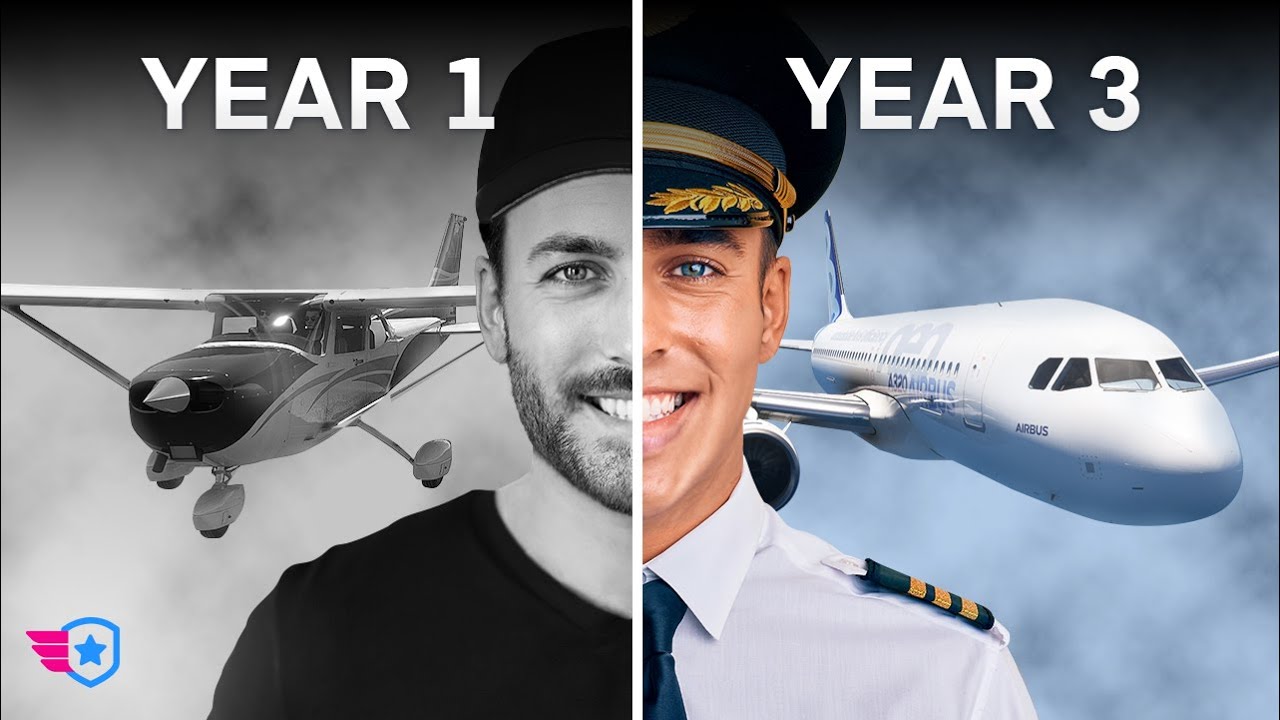
Becoming a pilot is as much concerning individuals as it is about airplanes. You will rely on advisors who understand when to press you and when to pull back. You will depend on classmates that use a shoulder when a challenging lesson lands hard. You will rely upon friends and family that aid you stay based, who advise you that trip is an advantage, not a prize to be extolled. The emotional arc of training issues: the very early interest, the mid training course improvements, the moments of doubt, and the silent satisfaction of a challenging solo completed. It is typical for nerves to ride high throughout a crosswind landing or a late-night alteration of climate charts. The most effective pilots I understand deal with those minutes as details, not as a decision on their worth.
All along the way you're constructing a toolkit that expands much past the cabin. You acquire the capacity to determine threat, interact smoothly under pressure, and preserve a position of long-lasting discovering. You discover to pay attention to the climate, to pay attention to your own body, and to listen to the airplane. You pertain to understand that flight is not regarding conquering nature but concerning appreciating it and dealing with it via discipline, preparation, and excellent judgment.
A realistic look at the financial investment and the path forward
There is a substantial cost to training, and it is worth calling freely. The rate of admission is not simply money yet time and individual sacrifice. You trade numerous months of a regular task for flight hours that build up toward licenses and scores. If you're chasing an exclusive pilot certification alone, you might allocate a couple of months to a year depending upon climate windows and your specific pace. If you're aiming higher, the time dedication stretches, with instrument training, commercial training, and possibly airline-specific needs layered in.
In parallel with the cost there is worth. The skills you get-- air technique, danger evaluation, specific interaction, and a deep understanding of weather sensations-- convert right into lots of locations of life. You will certainly notice sharper decision-making in daily jobs, much better stress and anxiety management under stress, and an enhanced sense of responsibility when browsing complex environments. Completion result is not just a certificate; it is an adaptable core proficiency you can bring into a life time of specialist or recreational aviation.
Two useful checklists to guide your readiness
Checklist before registering in a brand-new flight program:
- Confirm that the college is recognized and that the aircraft fleet is well maintained Visit the facility and observe a session to determine instructor experience and student engagement Review the average hours needed for the certification you desire and the common weather condition downtime you may expect Ask regarding the development speed, the schedule of simulators, and the policy for weather condition cancellations Ensure there is a transparent cost model with a clear break down for aircraft leasing, trainer fees, and examination costs
Common training turning points you will experience in the process:

- Private pilot certification accomplished after building a strong ground and flight record Instrument score made by showing proficiency in simulated and genuine instrument conditions Commercial certification that reveals you can do to specialist requirements under supervision Multi-engine or complex airplane recommendations that broaden the kinds of airplane you can operate Flight teacher rating that allows you to educate others and fine-tune your very own understanding with teaching
The path after the certificate
With a certificate in hand, numerous pilots pick to involve with a broader environment. Some stay within the flight school network as instructors, constructing hours while mentoring brand-new trainees. Others transition to regional or national airlines, getting in a world of bigger airframes, more complicated procedures, and a different rhythm of schedules. There is likewise a course for general aviation lovers that go after beyond the fundamentals-- gliders, taildraggers, or vintage aircraft-- each with its own set of technological needs and charms.
Regardless of where the next actions lead, the core proficiencies stay with you. The routine of preflight rigor, the practice of deliberate scanning, and the ability to remain tranquil when points are not going perfectly are transferable skills. The skies may award you with new difficulties, but the self-control that got you there stays a continuous companion.
Two courses with unique flavors
For some trainees, the trip begins with a small, efficiency-driven program at a college or a customized institution. The environment is academically extensive and organized, and you could be bordered by peers that are additionally going after levels or tightly timed career tracks. This course can be excellent if you want a clear professional trajectory and you enjoy the cadence of established milestones.
Others start with a smaller institution that focuses on mentorship and hands-on practice. The vibe can really feel more intimate, the schedule extra flexible, and the learning contour steeper in the feeling that you might juggle even more variables on an everyday basis. This route typically suits individuals who like a tailor-made experience and that want to grow deep individual partnerships with instructors, mentors, and fellow trainees that share a love of flight.
The facts of weather, upkeep, and safety
Weather stays the air you need to reckon with each day. A forecast that looks pleasant on the web page can end up being a constraint airborne. That is not a failing of the system; it is the fact of flight: risk is real, and the very best pilots handle it with a strategy that continues to be versatile to new info. You discover to appreciate ceilings and presence, to analyze METARs and TAFs with self-confidence, and to weigh the probabilities of making a very early return versus pushing ahead when a goal is essential. The capacity to pivot in genuine time is not an indication of weakness; it is the indication of an experienced specialist that has actually built a prepare for backups right into the route.
Maintenance, as well, murmurs right into every training day. A student rapidly learns that the aircraft is a living instrument with its very own peculiarities and requirements. Circling back to the shop for a needed component or a quick examination is not a hold-up to be sustained; it belongs to the procedure that safeguards your life and the life of your instructor. You gain a gratitude for the unnoticeable labor behind every successful trip: individuals who maintain maintenance logs exact, the technicians who guarantee controls feel precise, and the dispatchers who develop trip routines that maintain you safe and on track.
The delight and the responsibility of piloting
There is a peaceful joy in recognizing you can read a climate graph and translate it into a secure flight strategy. The fulfillment of a well-executed crosswind landing, of getting rid of a tough approach with margin left for mistake, and of connecting your intents with a calmness, concise voice is not manufactured adventure; it is earned with the slow-moving, unrelenting work of practice and comments. The duty you bring grows with your abilities. If you pick to carry passengers or head into more demanding airspace, you shoulder a responsibility to version safe habits for others, to share what you recognize without conceit, and to stay attentive regarding your own limitations.
A final reflection for readers taking into consideration the journey
If you are reading this and evaluating the decision to begin pilot training, one of the most straightforward advice I can use is this: it will certainly require time, money, and psychological energy, but it will certainly also brighten a brand-new way of thinking of your very own capacity. It will certainly disclose exactly how to move with purpose with unpredictability, how to anchor your decisions in a constant method regimen, and just how to listen to both the sky and the instrument panel. The reward is not simply the certification on a wall; it is the self-confidence that you can deal with the unidentified and still maintain control, no matter what gusts or clouds you encounter.
For those who continue, the roadway in advance is a series of tiny, intentional steps strung AELO Swiss Academy with each other into a long, readable trip log. You will locate mentors who press you just previous your comfort area, pals that share the same fascination for scale and climate, and an inner voice that learns to trust you back. The A to Z of pilot training is not a cool alphabet; it is a living map that expands with you, one hour at a time, as you learn exactly how to partner with the air and exactly how to assist your very own ambitions via the ever-changing canvas of the sky.